Wednesday, January 17, 2007

The Waking

OK fellow Ramage-readers I thought I'd jump on here quickly as I am re-reading the introduction. I always liked that bit of Roethke's poem, "The Waking," that Ramage quotes:
"I find my way by going where I have to go" (13).
"I wake to sleep, and take my waking slow" (29).
So I thought I would check out the entire poem. It's a short one and here is the link to "The Waking."

I can see why Ramage likes the poem and why it is a useful example of "the way," "hodos," and yin and yang. I did, however, find that the lines in the actual poem are a little different than the quotes in Ramage. How about that.

Hellerrr Errrrbody


I am Shanique, a Professional Writing major who's getting very old. :0( I will be 22 this month and life is goin way too fast )0: I am definitely a people person, I once made friends with a crackhead at a bus stop, she was cooler than alot people I know!!!! I love Rent!!!!!! I have yet to see the Musical on broadway (I'm broke) but I've seen the movie about a million times and own soundtracks of the musical and the movie. I will make it a priority to see it by the end of 2007, then I will be an official renthead!!! The Rent quote that defines me comes from the infamous La Vie Boheme Scene. "To days of inspiration, playing hooky, making something out of nothing. The need to express, to communicate, to going against the grain, going insane, going mad!" Yep that's me!! Have a wonderful day everyone. Peace!

Identity Rocks!

OK, so I understand how language is needed to express identity and I get Ramage’s three ways of creating identity, but there are definitely more ways of becoming the person that one is and thank goodness that he didn’t explore all of them; he tired the subject enough.

There is obviously the “given;” where you were born, how and to whom, then the “readymade,” which I believe means the identity we feel the need to have in a certain setting, like Ramage’s example of work. There is also “the constructed.” I think Ramage referred to this as the consumer- we show our identity by what we own.


According to this theory, our only real identity is the one we are given- rich or poor, farm kid or city dweller, etc. and we fake the rest. I don’t really agree with this theory because we have true identity from our experiences and though at work or school, we may have a certain identity, it is an identity which we mold into our own-- we are still our true selves and the “readymade” is not all the outsider’s see. I do understand and agree with the “given” and the “constructed” identities.

Also, I’m having a little trouble connecting all of this to rhetoric. I suppose because language is our aim here, that using it and rhetoric is a way to proclaim, or rather talk in circles around, our identity. Oh, and “P-Dog” was pretty funny!

(PS- This is M-Dog.
All you must do is look at her
and she wags her big fat tail!
Her identity= Happy, Ditzy Dog!)

Ru-Bear


This is my baby girl Rajah-- She's around 9 years old and since rottie's live till about 8, her health isn't great and she on a bunch of med's-- but she's doing good!! And she's home in the Scranton area and I MISS HER :-(

-Julia

Ramage, you crazy fool!

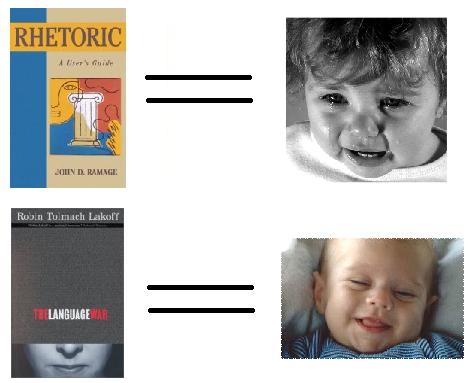
At the very least, reading some of Rhetoric helped to define what the heck rhetoric is! I have to admit that I was more intrigued by “Four Reasons for Abolishing Rhetoric” and not because of the obvious hate for rhetoric, but because it seemed to define it better than Ramage. I’m guessing that’s because it was more clear. :-)

In Philosophy, we read about the discussions of Socrates and Plato and without yet mention from the book, I realized that this babble may be the definition of rhetoric and I was right! It was exciting to use knowledge from another class.

Anyway, Ramage went on and on and on to explain the many definitions that can not be completely explained about Rhetoric. Enough to make one dizzy and enough to make me loose my train of thought and to have to read a paragraph twice over, just to pay attention. I can completely agree thus far with the crying baby.

Hi Again

Hey, it's Julia! So this is my second post and aperently my first was in some random blog- I'm not sure what happened! I'm the first from our class here, so hopefully I am in the right place. Anyway, I'm a Junior Pro. Writing major and I also like reading and being creative- jewelry, painting, drawing, kniting (lol).

Tuesday, January 16, 2007

Rhetoric in 5 minutes (or less)

So here I sit as you are all writing about rhetoric. How about that. What is this rhetoric thing...well, if you think I'm gonna sit here and unveil some deep, hidden meaning of rhetoric...well, you're gonna be disappointed. That's not our (?) "way."

Anyway, I hope I did not bore you all to death with talk of rhetoric and democracy, discourse and theory, and demonstrations of this, our beloved blog. I'm looking forward to a great semster.

So, it's 10:44 now...class is almost over, as is your five minutes of writing on "what is rhetoric?" Should I call time? I guess so...Don't want to push it too far today ;-).

Hello there blogging world

what? That's right. What?!?

Who said you could say that?

Wednesday, November 15, 2006

I still have MMMBop stuck in my head...

Tuesday, November 14, 2006

EXNOMINATION

Lakoff describes Roland Barthes' theory of EXNOMINATION:

"If you are a member of a dominant group, your attributes are
invisible, as your role in making things the way they are is not noticeable ...
Exnominated groups become 'normalized': they become apolitical and nonidealogical. They just
are. Their rules become the rules" (54, 55)

Curtain #1...

Curtain #2...

Is satire a savior in this war?

Fanfreakingtastic!

In one word, Fanfreakingtastic!

This is, with out a doubt, the best book I have read in any subject throughout my college career! Robin Lakoff, though writing from as a descriptor of the intricacies of language and tone, doesn’t let her obvious mastery of the English language fall below an intellectual collegiate reading level. Her hidden insincerity is more than amusing as she relates certain issues in our present and past where semantics and word choices can become the seat of controversy and/or public favor.

Throughout the first chapter, she looked at the overabundance of semantics in America. If the word “nigger” is offensive, why is it in the dictionary and why is the fact that its offensive not stated immediately in its definition. She eloquently states that the word may not be offensive to everyone as many Americans use it as a form of greeting. She also states that its only a type of person who needs to look in the dictionary to define themselves. An uneducated person would see her as a racist, but not I. I see that it’s only certain people who dwell on such things in order to create controversy.

Should the word holocaust only portray the Nazi’s extermination of the Jews? Should they have hold of a word that has different definitions? Should a word be thrown into a single definition or would the common use of it take away from its meaning? Her points are endlessly amusing and thought-provoking. Her chapter on the status quo only enthused me more as she broke down certain topics that violate/perpetuate the norm and show how the language used can hold sway. I am currently reading the politically correct chapter but wish to reread the second chapter.

Monday, November 13, 2006

I'm one of Us

I just want to commend Robin Lakoff for pointing out her bias from the beginning. Robin, I appreciate it. Although, I found The Language War to be a slug—I felt like I was dragging my feet through 12 inches of snow, Lakoff did have many very interesting points: I would like to start with her analysis of Henry Hyde. Generally, I am one of the first to admit that hypocrisy is a part of life, although, it may not appear to be hypocrisy from the hypocrites perspective. I also tend to find hypocrisy amusing—as I did in Hyde’s case:
  1. His stances on campus speech codes and support of the Communications Decency Act are so blatantly opposite extremes of the same argument, First Amendment rights. I am curious as to how Hyde would have defended his position.

  2. Hyde was supporting the curtail of campus speech codes at the same time he
“was enthusiastically supporting a May 1991 Supreme Court decision (Rust v. Sullivan) that forbade medical personnel in hospitals of clinics that received and government support from so much as mentioning abortion to their clients (Lakoff 102)”
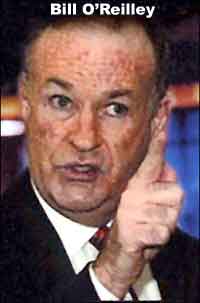
Funny stuff. And now, more Republican Hypocricy. In an article on AOL News, two abortion clinics in Kansas called for Bill O'Reilly and Phill Kline to be investigated after O’Reilly made claims of having Kansas abortion records. O’Reilly claims that George Tiller was performing abortions on women because they were depressed. I picked this article for two reasons:

  1. Bill O’Reilly’s choice of words—
    “executing babies!”


  2. and one point that is buried deep in the article:
“Tiller, one of the few U.S. doctors to perform late-term abortions, has been targeted by protesters for years, his clinic was bombed in 1985 and he was shot by a protester in 1991” (AOL NEWS).

Some of the tactics used in protest of abortion clinics aren't amusing.

Lakoff says that what politicians are trying to do is pin their opponent as the "other". Well, in O’Reilly’s attempt at controlling meaning, he is clearly trying to pin Tiller as an OTHER. Most normal people do not “execute babies;” therefore, Tiller is the "extremist" outsider and O’Reilly has asserted his meaning-making control.


But O’Reilly may not have been effective at all. The public is generally knowledgeable about abortion, and may find that, in fact, O’Reilly is being extreme in his claims. This could potentially have a reverse effect on O’Reilly, positioning him as the extremist. Time will tell.


Another section of Lakoff’s book that I found rather interesting was exnomination. I was familiar with this concept before this book, because once I attended a feminist discussion panel. A member of the audience asked why there isn’t masculinism since there was feminism. The answer was, basically, that ...
everything already was masculinistic and because it was the “status quo” no one realized it. Feminism exists in order to achieve balance. (As Lakoff would say, re-nominate the exnominated.)


I feel that Lakoff’s title is perfect. She weaves through the texts that display that politics is a

battle over semantics

and as long as we are the exnominated party, we will have little to complain about.

In this book, I also found the importance (and ambiguity) of pronouns . I knew all along that pronouns were non-descriptive. I knew that using a pronoun was a way to vary sentence structure. But pronouns are powerful little words.

Tuesday, November 07, 2006

Snapshot #1

I said, " look, I don't get what your problem is!"

He said, "you stepped on my cat!"

I said, "that was your cat?"

He said, "Duh!"

I said, "Well then, I'm sorry...now shut up and leave me alone."

Lakoff Wannabe

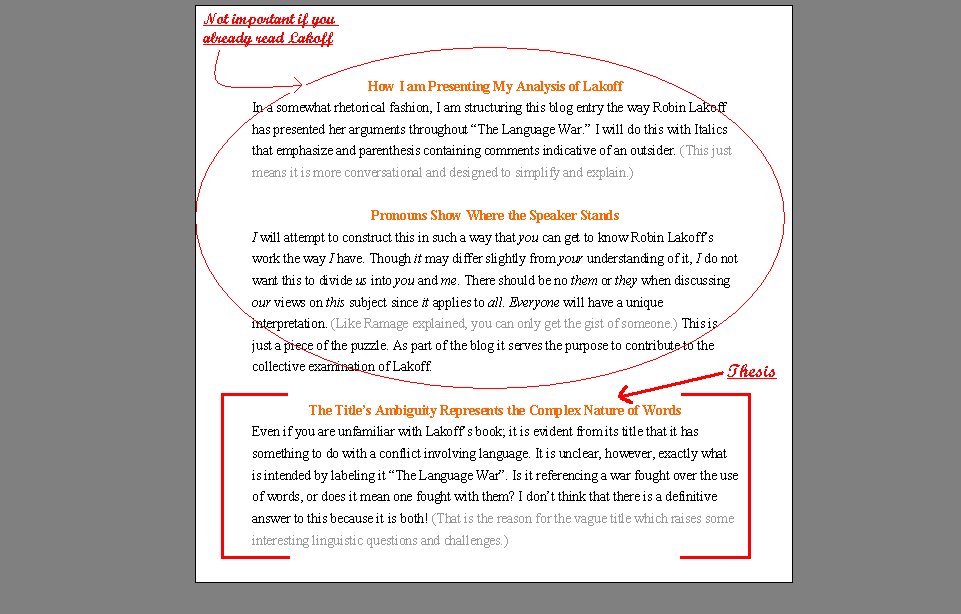
How I am Presenting My Analysis of Lakoff
In a somewhat rhetorical fashion, I am structuring this blog entry the way Lakoff has presented her arguments throughout “The Language War”. I will do this with Italics and parenthesis containing comments indicative of an outsider. (This just means it is more conversational and designed to simplify and explain.)
Pronouns Show Where the Speaker Stands
I will attempt to construct this e-paper in such a way that you can get to know Robin Lakoff’s work the way I have. Though it may differ slightly from your understanding of it, I do not want this to divide us into you and me. There should be no them or they when discussing our views on this subject since it applies to all. Everyone will have a unique interpretation. (Like Ramage explained, you can only get the gist of someone.) This is just a piece of the puzzle. As part of the blog it serves the purpose to contribute to the collective examination of Lakoff.
The Title’s Ambiguity Represents the Complex Nature of Words
Even if you are unfamiliar with Lakoff’s book, it is evident from its title that it has something to do with a conflict involving language. It is unclear, however, exactly what is intended by labeling it “The Language War”. Is it referencing a war fought over the use of words, or does it mean one fought with them? I don’t think that there is a definitive answer to this, and that is the reason for the vague title. (In any case, it raises some interesting linguistic questions and challenges.)
A War over the Meaning of Words
Lakoff says “Culture, after all, is the construction of shared meaning.” She states that we are interested in different media related stories because they are about how we define of ourselves. She states that there is an ongoing struggle to hang on to our personal meaning of words. We are comfortable when we know what is going on and are able to express ourselves. This is not always possible though because even if we say what we mean, people hear what they comprehend according to the connotations they have assigned. (Repetition helps to create this shared meaning.) If you are told countless times that you are dumb, you will know that word by how others perceive your actions. (Say, if you can not pass tests, you will fall into the culture’s definition of dumb and be forced to live with that label despite other elements of your personality that may make you smart.) Do you fight for your meaning of smart and dumb, or does the population decide your fate?
A War with Words
How do we assign meaning to words? With other words! (This merry-go-round of meaning can be dizzying.) This is where the status quo has the upper hand. (This applies to the conservative party as well, according to Lakoff.) Tradition needs no explanation because it is innately understood, even if it is wrong. The issue of politically correct words illustrates this point well. The Black Panthers successfully made it p.c. to call African Americans ‘Black’. This aided in the civil rights movement because African Americans were no longer defined by something that would make them seem inferior. Being ‘black’ (not ‘colored’ implying that they were diverging from the norm) enabled them to define themselves.

dog bites man. thats plausible. man bites dog? thats just unlikely.


I cracked open Lakoff's book and began to read it with the expectations pretty low. Besides dealing with those wonderful patrons at the restaurant I waitress at, I had yet another reading to pick apart and relate to. Don't get me wrong, Language War was interesting, but if I had the chance to actually sit down with it without 10,036 other things on my mind I'd like it so much better. Yet theres a lot of stuff I decided made sense. More so then Rhetoric. Compared to The Language War, my trip to Ramageland was like driving thru Death Valley in a car with no AC in between Paris Hilton and The Nanny. Talking simultaneously. Yeah that bad. Sorry Ramage... I just didn't dig your flow that much.
So 2 glasses of wine after work ( it was a rough day. ) and half a pack of cigarettes later saw me at The Markedness of the Feminine and the Female, and about gender-based markedness. Its no longer policeman. Its policemen, policewomen. Language from long ago was based the same as society was run, with a male dominant factor. Besides women not really emerging from homemaker status until the post-war years when the girls had to bring home the bacon, naturally the language was male oriented. Just shows how language varies with time and culture and how the woman's movement changed society, which in turn changed the language.
Welp. DUH. sorry guys, I'm really not going to enlighten anyone with my paper. Besides I think everyone else's points are way better than mine. I can't really draw personal parallels to exactly what Lakoff was saying in The Language War, even though I understand where shes coming from. I understand that language has the ability to mean more than what it marks. You could open a dictionary and find so many words that have come to mean something else than just what theyre supposed to be. Then theres language and reality. Language has the power to make things reality. Philosophically, I could ask "Am I real?" "Am I an illusion?" Language would prove me to be real. People can see me. I can be described collectively using the same words by different people, therefore I myself am a collection of verbs, adjectives, nouns, etc. I am composed entirely of words and phrases. I am the result of society.
Then theres the question of logical and illogical, of plausible and of unlikely. The whole dog bites man, man bites dog example makes sense. If we hear that a dog bites a man, we assume that the dog was pissed off, it was playing hard, it was protective. But a man biting a dog? Why the heck would a human being bite a dog? What kind of person bites a dog? The questions that arise in our minds from the simple swap of words is astounding. Society is Language War for this reason. You've got these words and these exceptions and its just the way we've been taught or programmed to think. You've got your girl that sleeps around. Shes such a hussy. Then you've got your guy that gets the chicks. He's the man. Forgive me for bringing this typical arguement up but seriously, it also links to the whole markedness of feminine and the female language barrier. Not in the name, but in the context.
Okay, so I'm not so proud of my readings with Lakoff. I'm having trouble getting really into her book. Im just tired and cranky and really hoping for a winning lotto ticket. Maybe next time I write I'll be on a beach, looking alot like that saucy doggy up there.

Robin Lakoff, One Witty Linguist

I'm not sure if I'm just easily amused or not, but I knew that Robin Lakoff's book would be good right from page one. The title itself, "The Language War," alludes to some great call-to-action--the struggle to gain, re-gain, and/or maintain control of language. Carting my nice hardback version to and from Advanced Composition class in Lytle (the furthest building from the dorms; think Pluto to Earth, if you need a reference point), made me feel important.

But more importantly, anyone who can find a way to legitimately reference the "Ebonics debate of 1996-1997"(1) in the second paragraph of her book (which looks like an abridged version of the Bible) has my respect. And this is just the beginning...

Way to go, Robin!!

Speaking of Lakoff's introductory chapter... (called "What I Am Doing Here, and How I Am Doing It"), I counted the useage of some form of the noun "linguist" over twenty-five times. This was just during the first five of the fifteen pages in the chapter. I'm not sure why I counted, but I do know that i stopped and skipped ahead a few pages in order to get to the next chapter.

Once Lakoff gets over her obsession with asserting that she is a LINGUIST and what LINGUISTS do--she actually gets down into the "nitty gritty" of her book and uses examples that not only make since, some of them are funny.



The first two chapters, "Language: The Power We Love to Hate" and "The Neutrality of the Status Quo" examined the impact that words have on everyday situations, for instance what is "normal"--or rather, what is considered normal as defined by what is socially acceptable in a long line of so-called traditionally-accepted values and roles, i.e. the opinion of the general public becomes, in effect, "fact" (think of this as a Wiki-society).

"The Neutrality of the Status Quo" exposed the problem of gendered language, especially in the English language. In my American Women in Literature class, we discussed this issue as well. Most standard terms were originally worded in masculine terms, for example, policeman, congressman, etc. While in other languages, such as German, the words for person (Mann) and people (Leute) are considered "neuter" and different from the gendered words used for woman, man, girl, boy, and child. However, this does not mean that English is the only language who has gendered language. The word for teacher in German is Lehrer. However, this refers to a male teacher--a female teacher is a Lehrerin.

Even most insults in the English language actually revert back to a woman. "Son of a bitch" obviously refers rather directly to someone's mother. Even "bastard," an insulting term usually used by women and directed at men, actually calls back to the behavior of his mother--who has APPARENTLY had sex and born a child out of wedlock. Once again, the only reason people give a shit about that in the first place is because we live in a "Wiki-society," where the "social values" of either a) the majority or b) the powerful have been passed down for generations upon generations and have made people judgmental.

FOR EXAMPLE:

1) "The baby cried. The mother picked it up" (43).
2) "The baby cried. The mother ate a salami sandwich" (43).

As far as conformity goes, the first chain of events is a success. The mother who goes immediately to her baby's side the moment s/he starts crying is "good." The second example, unfortunately, is "bad" in terms of traditionally accepted parenting. When I read this example in Robin Lakoff's book to some of the residents that live on my wing in Schuylkill Hall (where I'm a Community Assistant), they had an immediate adverse reaction. This included saying things like: "What kind of mother would do that?" and "What's wrong with her?"

The second example in its semantics alone makes assumptions about women as a gender. By saying "the baby" and "the mother" the words seem to imply that woman is "mother" first and foremost. The fact that when a mother does anything other than care for her baby when it demands attention commands such a negative response, seems to beg the question: Why can't women have other interests/responsibilities/tasks/duties/jobs/etc. not related to motherhood?

Snap judgments based off of a deviation from the social "norm" are not different from other forms of prejudice that exist in society: prejudice = judging someone based off of how a group acts/should act. This "mother" in Lakoff's second example is judged because her experience of motherhood simply doesn't fit the mold. But...Is she even the baby's mother? Or did you just assume she was because she happens to be a WOMAN standing near a CRYING BABY. Where is the father? What if the baby is just crying for attention and s/he doesn't "need" anything (such as to be changed or fed). Since when are we in a position to criticize someone's parenting skills without invitation?

Kudos to Lakoff for shedding light onto this issue that most people don't even notice.

The difference between saying "I will" and "I promise" is defined by the exact meanings of the words "will" and "promise" themselves. If something will happen, it is being predicted to occur at some future time and date. However, if something is promised to happen, it becomes more concrete or "performative" (22) as Lakoff says. This reminded me of a teacher I had in elementary school. If a student wanted permission to use the bathroom, they were expected to say "May I use the bathroom?" If someone asked "Can I use the bathroom?", the teacher would give the smart-ass reply, "I don't know, can you?"

Lakoff's laundry list of indirect ways to apologize made me laugh, especially the highly-discussed "The cat looks upset" (24). I think it is alot easier for people thesedays to make trite observations rather than to take responsibility and be genuinely sorry for something they have done.

Society as a whole is looking for new ways to take responsibility off of its proverbial shoulders. For example, the new Lexus can parallel park itself using magical and mystical sensors that guide the vehicle into the space. Now...when one of those sensors inevitably breaks, whose fault will the collision be? What will THAT apology sound like?

In this great and magestic "Wiki-society" (otherwise known as America), you have been called to action. By Robin Lakoff, by her book "The Language War," by every soldier fighting the "War on Terror" instead of the Iraq War, and hopefully by your inner-idealist every time you hear the political rhetoric of today. So much of language is out of our hands today, and into the pockets of the powerful in government and big corporations.

But aren't all things that are worth having or understanding worth fighting for?

Welcome to "The Language War."

Language--something worth fighting for

In "The Language War" Robin Lakoff says

"Language is not 'just words'. It enables us to establish our selves, and
ourselves, as individuals and as members of groups; it tells us how we are connected to one another, who has power and who doesn't."
Language is how we define ourselves and our identity, and it is very powerful. How you phrase a sentance can either put the speaker in a dominant or submissive role. This is shown with the example of a cat getting stepped on, where the offender can appologize nicely and take the blame ("I'm sorry"), or turn the blame onto someone else ("Why was the cat there?")

One way of getting this language power is by creating public language. With the Anita Hill/Clarence Thomas sexual harassment case, women created a motto "They just don't get it." It gave women interpretive power to decide what "it" is and how you "get" it. Also, the issue of sexual harassment was forced into public notice. It is accepted now, and when I applied to work at a grocery store, they even showed a video on what was considered sexual harassment.

There is a lot of "political correctness" in language these days. Feminists argue against the use of "man" as equal meaning to "human being," making "women" seem less human. They've gone so far as to ask for a gender neutral Bible. Instead of "mailman" they want "mailwoman" or "mailperson." Or to take gender completely out, "mailcarrier." I personally do not mind the use of "man" and consider it to include women. In spanish "ellos" means them, male, and "ellas" means them, female. But if there is a group of men and women together, "ellos" would be used. It is just understood, under the masculine term. The issue in political correctness is replacing somewhat OFFENSIVE words with others that are not.

"The Language War" quoted

"In the name of 'sensitivity' to others and under pain of being denounced as a sexist or racist, the postmodern radicals require everyone around them to adhere to their own codes of speech and behavior."
Also,

"P.C. attempts to redistribute power from the priviledged class...to the oppressed masses."
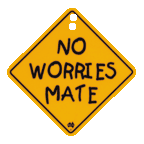
They say "African American" rather than "negro" and "mentally challenged" instead of "retarded." This created a renaming of many things to show how ridiculous it can get, with "follically challenged" (just say it--bald), or "vertically challenged" (short.) Apparently Australia can't use the word "mate" in public anymore.
"What next? banning 'no worries' so as not to offend the worried, or banning 'Down Under' So as not to offend those of us who live in the 'Up Over.'"

That's just culture destroying.

"Politically correct" reminds me of a song by Gretchen Wilson, "Politically Uncorrect" (Yes, to you grammar police out there, even the title is incorrect.) Her video reminds us how it is definately not politically correct to talk about God, among other things. ("Nothing wrong with the Bible," the songs says, which those P.C. feminists obviously didn't agree with.)

We can't say "Merry Christmas" anymore, because we might OFFEND someone who celebrates Hanukkah, Kwanzaa, Festivus, Winter-een-mas, you name it. Instead we are supposed to say "Happy Holidays" or "Season's Greetings."
Keep that in mind--December is approaching, mate.

I know the meaning of MMMBop


First of all, The Language War by Robin Lakoff is so much easier to understand and to read than Ramage's Rhetoric. (And I have to add that I feel sorry for anyone who pays $37.60 for this book... I'm sad that I paid $18.44 for it...) In all honesty, reading Ramage made me want to do bad things. (Ok.. I'm sorry; I'm horrible. No more Ramage talk.) Anyway, Lakoff is able to explain things in a way that I can understand. She keeps me engaged by using things I'm actually interested in as examples, such as movies like Thelma and Louise or The Godfather.

The only part of her book that I absolutely did not like AT ALL, was her introduction. While reading it, thoughts of Ramage came back, and I think I may have cried a little. However, I still decided to continue on to the first chapter (probably because I didn't want to fail this class) and was impressed. I knew what she was saying, and I wasn't bored!

The first thing I found intriguing was when she explained that apologies, and non-apologies, are also a part of language and can be interpreted in many different ways depending on what is said and how it is said. This brings me to the cat example that Lakoff uses. While each sentence is a form of apology, they progressively get worse and lay the blame on different people. Lakoff explains that politicians use a similar form of this "non-apology"--what they say may seem apologetic, but they either don't mean it or are only saying it to get people off their back. Public apologies are meant to make the person apologizing look good and seem sincere without degrading themselves.

The next part that I liked was "Meaning and Marking" in Chapter 2. We associate different words and phrases to mean different things. Lakoff uses the examples of the word "normal" to mean natural, simple, or expected.
"The baby cried.
The mother picked it up."
However, we find it very bizarre to read,
"The baby cried.
The mother ate a salami sandwich."
Immediately, thoughts form in our heads that this woman must be a horrible mother (No Wire Hangers!), even though we have no background information to the tale. Is the father tending to the child? Are we speaking of a different mother than that of THIS child? Or is the mother trying to break the child of an excessive crying habit? Once we hear a word or phrase that does not sound "normal" or "pleasing," we are so quick to reject it, and are even fast to deem it "abnormal" or "crazy."

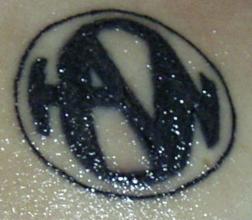
This brings me to my own example. When many people from my generation hear the name Hanson, the word MMMBop almost immediately fills their mind. Then the moans and groans usually follow, along with a picture of 3 blond boys that "look and sound like girls." Because of these negative connotations that started NINE YEARS ago, many are still skeptical of the band and fail to give them half a chance. Although they don't sing songs like MMMBop anymore, and have cut their long blond hair off, and are now all married (to women, by the way), the meaning of the word "Hanson" to many people is still, "That stupid MMMBop song."

My example could also be used in "Making Words, Making Sense" in Chapter 3. Lakoff argues that definition is more ambiguous than it is neutral, and that it could be used or manipulated to help powerful people gain more power. Immediately, my mind trails to the phrase "death tax." While a death tax is the exact same as an estate tax, that one small change in the wording causes a freak out among some Americans who have no reason to be angry.

The last part of the reading that really grabbed my attention was in the beginning of Chapter 4 when Lakoff makes an example of Thelma and Louise. The last thing I ever thought of when watching the movie was if people were offended by the fact that these women are freakin' awesome. While I have no problem with any of the content of the movie, it was kind of shocking to learn that there were mixed feelings about it when it first came out. Lakoff says that most women who saw the movie cheered at how Thelma and Louise handled their different situations (and by handling, I mean shooting people and driving off a cliff), while most critics and men questioned whether it was appropriate to portray women to behave in a violent manner such as this. Not only that, but Lakoff mentions that, through the issue of sexual harassment in Thelma and Louise, the movie also brought up the fact that
"too many men treat women as
children, sex objects, or possessions."
Lakoff says that because of the popularity of the movie, it
"universalized the problem,
presenting it from a female perspective, and gave
us a language, visual and verbal, in which to discuss it."
The language of sexual harassment came about because of one movie... what a beautiful thing.

All in all, I do like Robin Lakoff's The Language War, and not just because it isn't Ramage. Lakoff does an excellent job in keeping her readers engaged, and in displaying her information in a way that is easy to understand and even easier to follow. I, for one, love any book that gives me a reason to use Hanson as an example... Although, maybe I'm just an obsessed psycho...

Yo son, you's got the language, kid

When I first looked at The Language War I thought to myself, “Oh god, please not another one of these godforsaken rhetorical texts. Mahoney, why do you curse this class? Should I be spiteful? Spite I will. Spitey McGee here!” Well, that didn’t happen. Sorry, did I go too far? It happens. Thankfully enough, though, the book wasn’t like the other foreign text we read. (Ramage) Although Robin Lakoff does provide us with this lengthy account, it defers from Rhetoric: A User’s Guide with it’s much simpler way of explaining things. Thanks Robin. ( See above )

In the introduction, Lakoff goes on to offer us a number of questions of which I will account for here.
“How do stories we tell and hear, privately
and publicly, give us our understanding of ourselves and the society we
inhabit?” (pg. 7)

As she goes on to say, we must, as a whole, begin to analyze linguistic data so that we may be able to understand what effect it has on social, economic and political reality. So much of our common language influences the way others act and react that it should almost be a forgone certainty that we study the effects of this.

  • How does modern slang influence our society?
  • What about the apology, or the unconscious, un-apology?
  • How do we begin to study these seemingly simple tools of language?
Well, I’ll talk about one of the examples Lakoff presents. On page 28 Lakoff talks about the extended interpretation apology.
  • This means that there is ambigous language which presents either a positive or negative connotation, which the individual has to interpret.

"If I say, 'You’re a real genius,’ the literal interpretation is
the positive one, you’re smart; the ironic, that is, the nonliteral one, is
negative, you’re an idiot. On the other hand, I can’t normally say, ‘You’re a
real idiot,’ meaning ironically that you’re smart."

This example made me laugh a jolly old second or two—mostly because my friends and I use this logic all the time. Instead of politely telling someone, ‘hey, maybe that wasn’t the smartest thing you could have said,’ we have to belittle him, offering our best use of sarcasm to make him feel completely unwelcome. It’s a product of environment, I’m assuming. This theory of the extended interpretation apology most likely has been around for the past decade, because people grew tired of saying the same tired response to the same pathetic person over and over again. Most likely, that pathetic person realized his ineptitude rather quickly and either

  • a) shut up forever; or
  • b) became a little more aware of what he said in public.

It works out in the long run. A little further on in the reading, at page 58, I came across a section that talked about the rhetorical roles of

The discussion centered around the battle between the two parties and how they could potentially one-up each other. What struck me as déjà vu, was when Democrats retailiated in a Frank Luntz type approach. As a way of gaining an upper hand on the Republicans, the Democrats would invoke the term “extremist” instead of “liberal” when talking about the Republicans. “In the epithet wars that were the 1996 Congressional and Presidential campaigns, “extremist” proved to be a more dangerous label than “liberal.”
Again, I laughed when I read this section. I thought, “By golly, was Frank Luntz at the bottom of this, or do others find pleasure at creating havoc with response-driven language?” It showed what lengths parties would go to gain an upper hand—by using all of their rhetorical powers, they would finally defeat the other!
Finally, I just want to point out pg. 78, where Lakoff says this,
“I am tempted to suggest that one function of prescriptivism, amply attested here, is that worrying about how people talk avoids the necessity
of
paying attention to what they say—which could be a real problem. "
This was in response to the example in the text which was about the man in the elevator who was berated by three unknown occupants who, probably by there need for constant one-upmanship, corrected his grammar. This bothered me a lot. What’s the deal with grammar? Do we always have to keep our guard up around everyone?
  • OOPS, SORRY I USED THE WRONG TENSE—SHOOT ME NOW.
Seriously, not everyone has a stick up their butt all the time.
To those that do, I recommend this: Watch Save the Last Dance. Watch this scene:

  • Derek: “Yo Sara, ya wan me to hep ya out wit some moves?”
  • Sara: “Why yes, that would be quite swell, my newly found chum.”

*They proceed to go into a seemingly empty high school where Sara gets the stick out her ass and learns the ways of hip-hop and grunting.*

That will help. It isn't always about the way something says or writes something, but rather, it's about the message that one tries to get across.
Alright, well I must say, this book was a great read considering the previous text we had to deal with. But, without the prior knowledge about Ramage and his rhetorical ways, I’m not sure if it would have had the same impact that it did. In that respect, I thank you Ramage and Mrs. Lakoff.